UK launch planned · Christmas 2027
Their own phone. Not an endless feed.
Calls, messages and live location meet real-world missions: find something, snap it, finish it, then put the phone away.
Outside comes first
Missions end with something done, found, photographed or completed.
A phone when they need one
Calls, messages, camera, location and check-ins keep the useful bits close.
No endless feeds
No social media, open browser or unrestricted app store pulling them back to the screen.
You stay in charge
Choose who they can contact and which capabilities are available.

Why Pip
Their first phone shouldn’t become their whole world.
A first phone is supposed to give them more freedom: walking home, going to football, meeting friends, starting to do things without you right beside them. Pip is designed around that moment — helping them stay connected without turning every spare minute into screen time.
Useful when they need it. Easy to put down when they don’t.
For them
Calls, messages, photos, missions, collections and things to earn.
For you
Approved contacts, location, school mode, bedtime and capability controls.
The real world becomes the content
Do something. Snap it. Move on.
Pip missions have a beginning and an end. Score five penalties. Find something tiny. Photograph a brilliant bit of street art. Solve a family clue. Finish it, earn something, then the phone goes back in their pocket.
01
Go
02
Do
03
Snap
04
Done
Inside Pip
See what they can actually do.
A preview of the planned experience: connection, discovery, missions and responsibility. Screens and capabilities may evolve before launch.
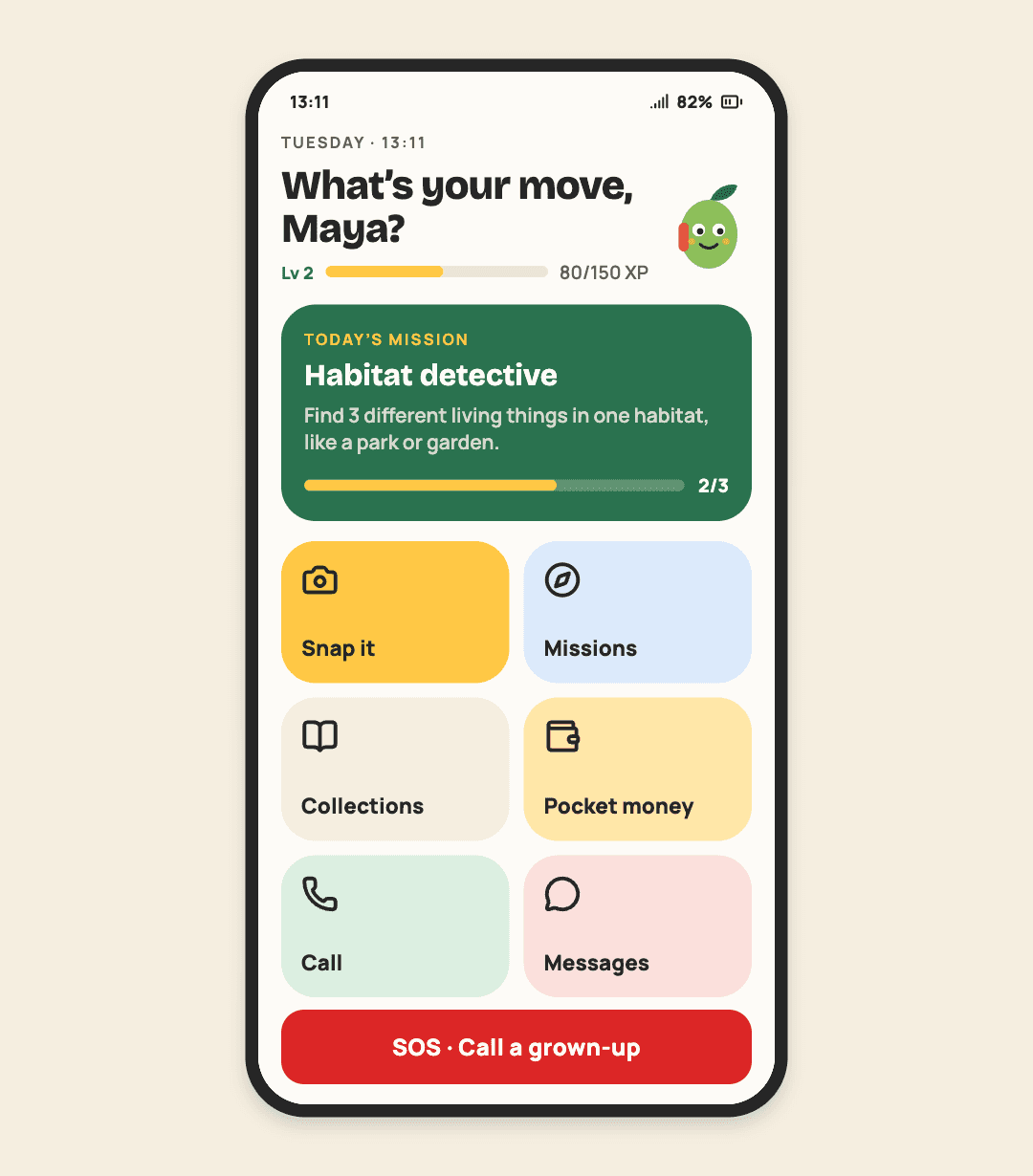
Home
Simple enough to understand at a glance, with the things they actually use.

Missions
Football, photo hunts, mysteries, nature and challenges you create.
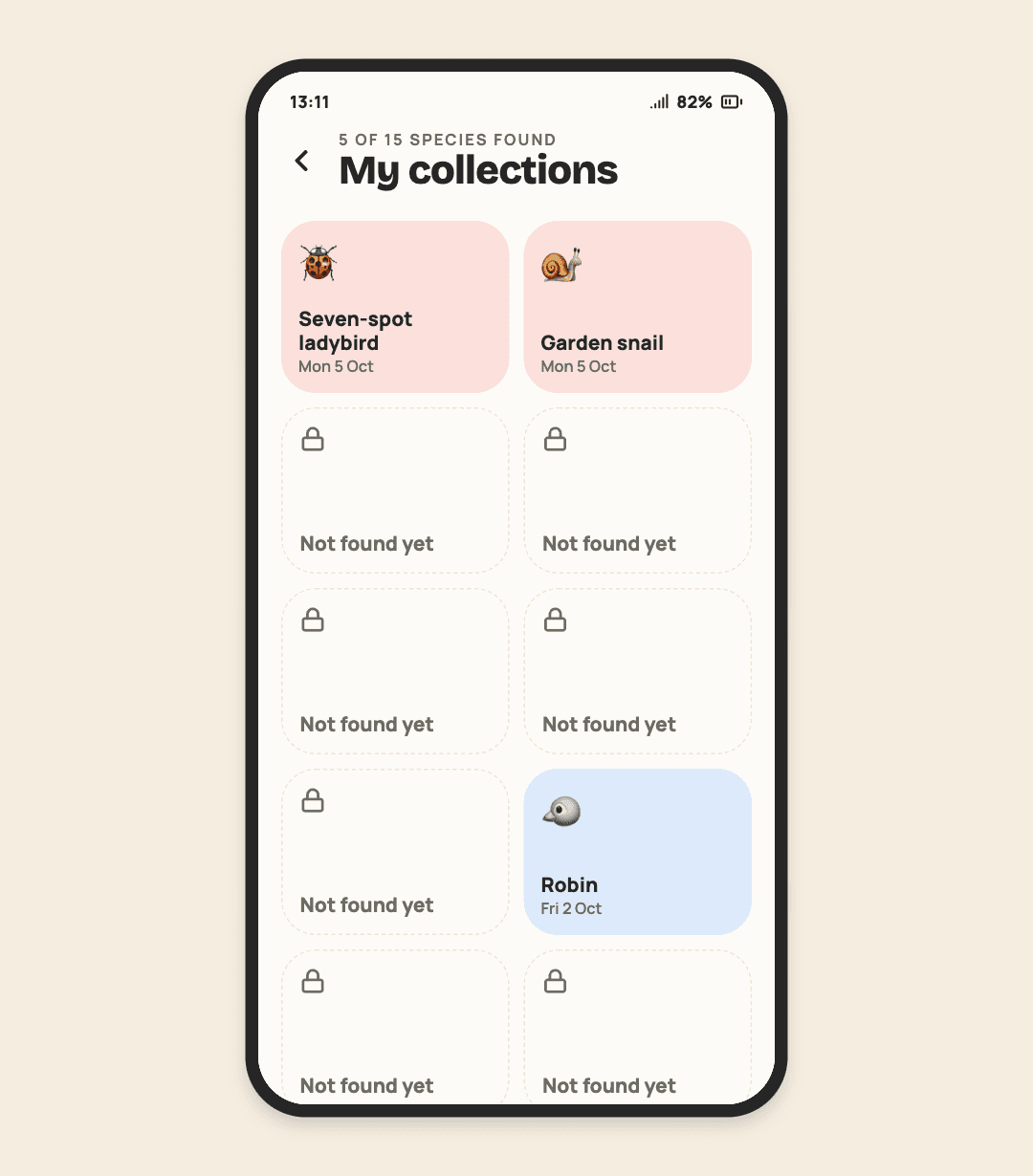
Collections
Keep the things they discover, complete and photograph along the way.

Pocket money
See what they’ve earned, what they’re saving for and what comes next.
Pip in real life
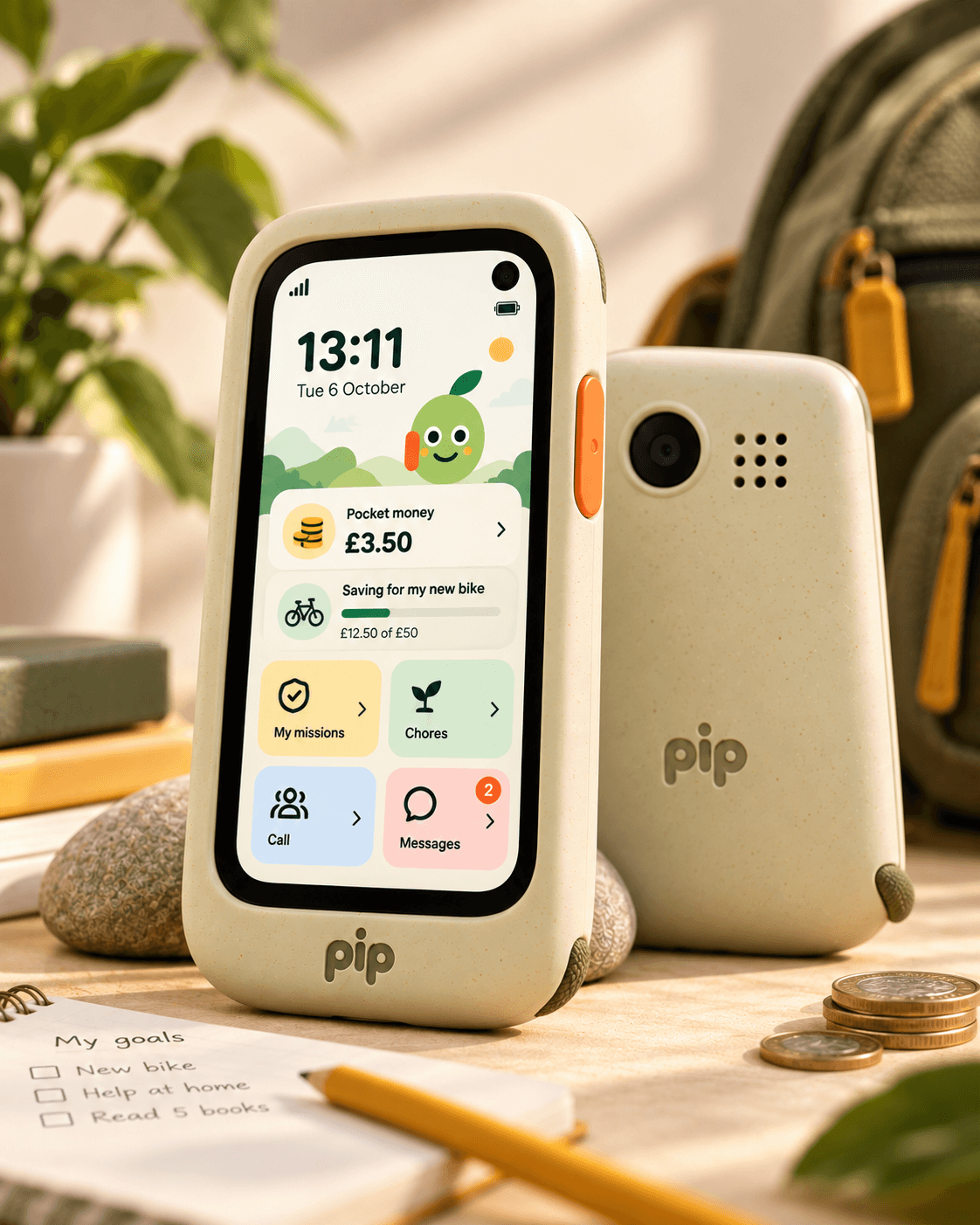
The best part happens away from the screen.

Discovery

Independence


For grown-ups
You decide what comes next.
Start simple, then add capabilities as they’re ready for them. Two children the same age don’t need to have the same phone.
Ready is a stage, not an age.
Calls & messages
Approved calls
Only people in their trusted circle.
Text messaging
One-to-one messaging with approved contacts.
Photo messages
Add richer messaging when you want to.
Ask to add a friend
Requests stay pending until you approve them.
Quick check-ins
Simple replies such as “On my way”.
Explore & create
Missions
Sport, photo, mystery, nature and family challenges.
Snap It camera
Take photos without feeds, filters or public posting.
Discovery
Identify and learn about things they find.
Collections
Save discoveries, achievements and completed challenges.
XP & badges
Positive progress without punitive streaks.
Money & responsibility
Pocket money
See a simple family-managed balance.
Pay
Tap to pay for approved everyday purchases with parent-set controls.
Savings goals
Save towards something they actually want.
Parent-set rewards
Attach money or XP to jobs and missions.
Responsibilities
Chores, homework completion, goals and everyday things to remember.
My day
A simple view of what’s happening next.
More independence
Location
See the device location when reassurance is useful.
Arrival alerts
Know when they reach home, school or another chosen place.
Maps & directions
Add navigation when they’re ready to travel further.
Music
An optional later capability rather than an always-on default.
Notes
A simple useful tool as Pip becomes more grown-up.
Boundaries
School mode
Quiet everything non-essential during class.
Bedtime mode
Reduce non-essential features at night.
Contact approval
New people cannot simply add themselves.
Always
No open browser
No general-purpose web browsing in the child experience.
Built in
No open app store
Capabilities are curated rather than freely downloadable.
Built in
Always there
SOS
Fast access to a grown-up when they need help.
Always
Emergency calling
Emergency access remains available regardless of modes.
Always
Battery & connectivity
Useful device status in the parent experience.
Always
Software updates
Secure updates keep Pip current as the product evolves.
Always
Make it theirs
Your phone. Make it yours.
Dinosaur today. Black silicone in a few years. Swap cases, straps and charms as their taste changes — without replacing the phone underneath.

Why I’m building Pip
I want a first phone to give kids more freedom, not more screen time.
People in my family are getting to the age where the first-phone question is starting to feel real. You want them to have more freedom — to go to a friend’s house, walk somewhere on their own, join clubs or just be out without you beside them — and still know they can reach you if they need to.
What worries me is what normally comes with that first phone. It isn’t just calls and messages. It can suddenly mean social feeds, an open internet and an endless stream of things competing for their attention.
And that’s the opposite of what I want for my own kids. I want them outside. I want them curious. I want them learning about the world because they’re actually in it — playing, exploring, noticing things, taking photos, trying something new and coming home with stories.
Pip is my attempt to build a better first step: a phone that keeps them connected and gives parents control over what they can access, but also encourages them to put it back in their pocket and get on with being a kid.
Oliver · Founder, Pip
FAQ
Questions parents ask.
How is Pip different from another kids’ phone?
Can my child download apps or browse the web?
Who can they call and text?
Will they outgrow Pip?
What happens to their photos and data?
When can I get one and what will it cost?
Founding families
Be there from the beginning.
Get product and launch updates, and hear about opportunities to help shape Pip. Joining the waitlist is an expression of interest, not a purchase or a reserved phone.
Join the Pip waitlist. No payment is taken here.